Why We Built Version History Into Structify
I used to feel like tweaking a dashboard was kind of like diffusing a bomb. You hover over the filter, you think about changing it, and then that voice in the back of your head kicks in.
"If I change this filter, will I break something downstream?" "If I edit this metric, will I lose the original version?" "If I tweak this dashboard, am I about to ruin reporting for the whole exec team?"
So you don’t touch it. You leave the dashboard exactly as it is, slightly wrong, slightly outdated, because the cost of breaking something feels higher than the cost of working with imperfect data.
Sound familiar?
BI Tools Trained Us to Fear Our Own Data
This isn’t a personal failing. It’s a systemic one. Looker, Tableau, PowerBI - the list goes on. These tools were built for a world where data infrastructure was owned by a small team of specialists. Analysts built the dashboards, everyone else consumed them, and if you wanted something changed, you submitted a ticket and waited. That model made sense when data pipelines were complex, brittle, and expensive to maintain, but it created a culture of fear around iteration that has never really gone away - even as the tools have evolved.
Change something up or downstream and you’re just praying nothing explodes. Praying no one Slacks you about something going wonky in the report link. Praying the Monday morning exec review doesn’t surface a number that doesn’t match last week’s. The result is teams that are sitting on goldmines of data but moving at a fraction of the speed they should be, with operations leads spending hours every week not on strategy, but on maintenance - on checking, on making sure nothing broke. That is not a good use of anyone’s time.
Data Shouldn’t Be Brittle
Here’s the thing. Data is just information, and information should be easy to explore, easy to question, and easy to iterate on. If data is conversational - and we believe it should be - it shouldn’t be brittle. The whole point of a conversational interface is that you can ask, refine, explore, and change direction without consequence. That’s what makes conversation powerful: you’re not locked into your first question, and you’re not punished for changing your mind.
But until now, that’s exactly what was happening in Structify too. You’d build a report, iterate on it through the chat interface, and if you went too far in one direction, there was no clean way back. You were working without a safety net. That needed to change.
Introducing Version History
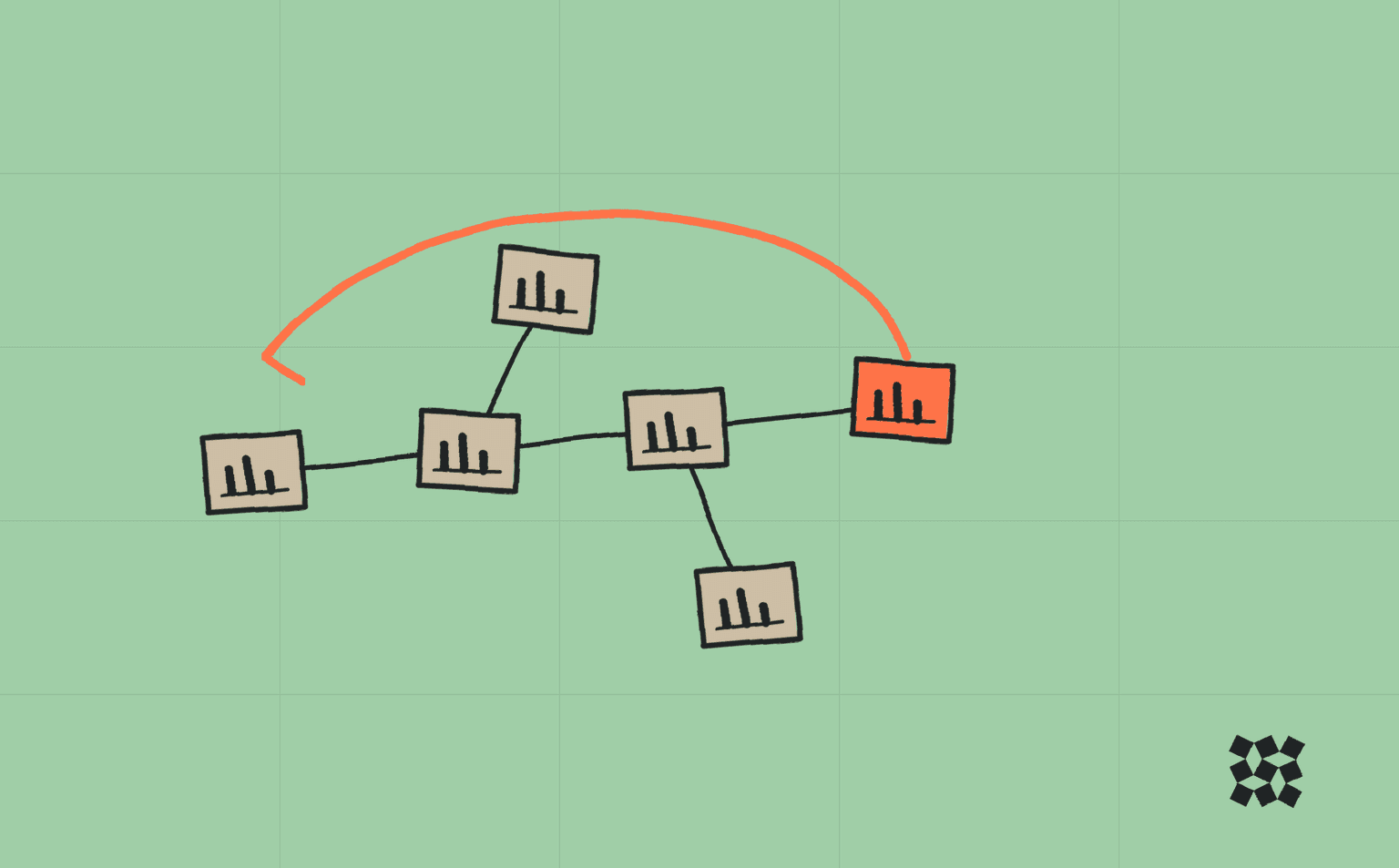
Starting today, every report and dashboard you build with Structify has version history. As you chat with the agent and iterate - refining a metric, adjusting a filter, restructuring a visualization - every version is automatically saved. You can move between them seamlessly, pick up from any point in the conversation, and explore alternative directions without ever losing your original work. Nothing breaks. You stay in flow.
It sounds simple, but the implications for how teams actually work with data are significant.
What This Looks Like in Practice
Imagine you’re an operations lead preparing for a quarterly business review. You’ve built a pipeline report in Structify and you want to try a different way of segmenting the data - by region instead of by rep. Before version history, that felt risky. What if the new segmentation breaks the downstream metrics? What if you lose the original view that the CRO has been referencing for the past three months? So you either duplicate the entire report manually, wasting time, or you don’t make the change at all, missing the insight.
With version history, you just make the change. Structify saves your original automatically, so you can explore the new segmentation, see what it surfaces, and keep it if it’s useful. If it’s not, you go back to the previous version in one click. No duplication. No risk. No lost work.
The same applies to finance teams stress-testing different forecasting assumptions, customer success teams experimenting with different churn metrics, and operations teams iterating on capacity models. Anywhere data exploration matters, version history removes the friction that was slowing teams down.
Who This Is For
Version history is particularly valuable for teams that iterate frequently and collaboratively. Operations and revenue teams are constantly refining pipeline views, attribution models, and performance metrics as the business evolves. Finance teams need to run multiple scenarios without losing their baseline. Customer success teams are experimenting with health scores and churn signals, and operations teams are building and rebuilding capacity and utilization models as the company scales.
In short: anyone who has ever hesitated before making a change to a report because they weren’t sure they could get back to where they started.
The Bigger Picture
Version history is a small feature, but it reflects something we think about a lot at Structify. BI is getting commoditized. The ability to connect to a database and produce a visualization is no longer a differentiator - every tool does that now. What matters is how fast your team can move from question to insight, and how freely they can explore without fear of breaking something.
The interface is no longer the product. Creativity is.
The future of data work isn’t perfect dashboards maintained by a specialist team and consumed by everyone else. It’s fast iteration and free exploration - a culture where anyone on the revenue or operations team can ask a question, explore the answer, change their mind, and try again, without submitting a ticket or waiting for a data analyst to have bandwidth. Operations teams shouldn’t be spending mental energy on query structure or worrying about downstream breakage. That mental energy should be spent on the actual problem: understanding what’s happening in the business and deciding what to do about it.
Version history is one step in that direction. It won’t be the last.
Ship fast. Iterate freely. No bomb squad required.