That sentence contains a distinction that matters. AI transformation is not a pilot. It is not a chatbot. It is the process of moving units of value and work onto AI - and keeping them there.
The unit of transformation is an AI business application: a quoting process, a control plan, a monthly report, or a workflow that used to depend on manual work. We approach transformation one portion at a time, automating the work where AI can create durable value.
The transformation is everything around those applications. It includes finding the use cases worth automating, building them, keeping them supported and maintained, and moving the people whose work has changed onto a new way of doing it. It is the continual job of keeping a company moving smoothly and efficiently.
AI transformation is not one product
It would be convenient if AI transformation could be tied to one specific, marketable use case. It cannot.
Every business works differently. Its units of value are different. A manufacturer may need to automate quoting or quality documentation. A distributor may need to coordinate orders across disconnected systems. A financial institution may need to make a regulated review process faster without compromising its controls.
The right application is form-fit to the business. That is why transformation cannot be reduced to installing one more SaaS product and inviting everyone to log in.
Why transformation needs a foundation
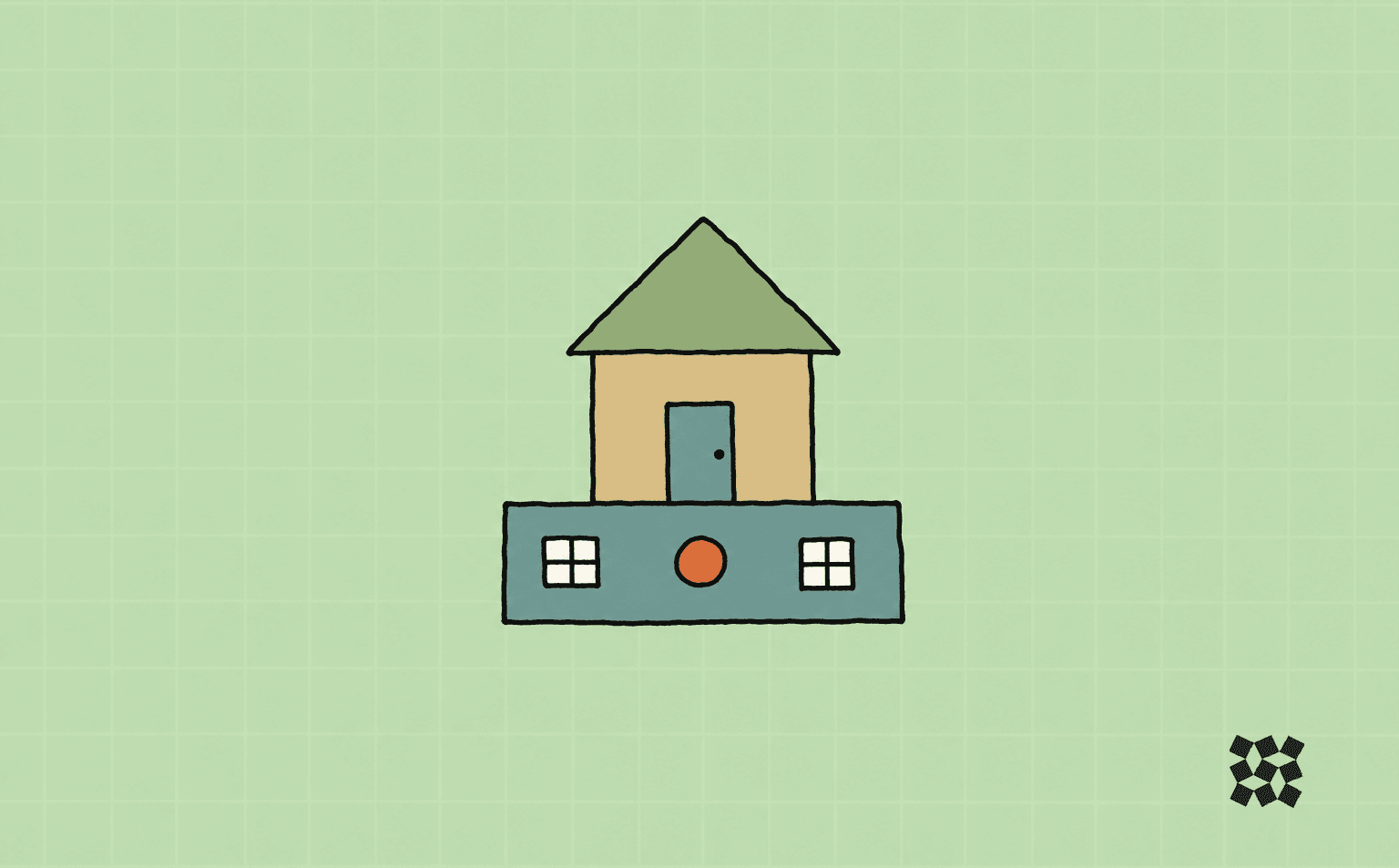
Before building a house, it is best to lay a foundation. If you want a backyard tent or a basement fort, it is faster to skip that step. But a house is something you have to live in. It is expensive, it is difficult to repair once the walls are up, and it is not allowed to fail.
At best, a lot of AI applications today are tents and forts. At worst, they are unstable townhouses waiting for a gust of wind or a big bad wolf. They were quickly thrown together, and they will fall apart just as quickly.
A company that takes AI seriously does not end up with one application. It ends up with dozens, then hundreds. If the logic of each one lives in the head of the person who built it, the business has created a clear key-person risk. Without one way to deploy applications, manage permissions, and preserve audit logs, a burst of wins turns into slow rot as nobody remembers how anything works.
Our goal at Structify is to be that foundation: stable to build on and easy to maintain into the future.
What belongs in the foundation
There are many components that help teams build successful business applications faster. Some of you may have heard them called semantic layers or ontologies. We think of them as two kinds of understanding:
- A data-level understanding of where information lives, how it connects, and what it means
- A business-level understanding of how the company actually works
Historically, much of that understanding was passed through oral tradition. Someone knew which report to trust, which field had been deprecated, or which exception mattered. AI cannot work from oral tradition. Both understandings have to be transcribed, connected, and kept current.
There are also layers that we do not yet - and may never - trust an AI to write on its own: authentication, permissions, audit logs, and security. You can vibe-code these in-house, but if they are wrong, the liability is yours.
One thing AI seemingly will never be able to do is absorb the responsibility of the person using it. Somebody has to be accountable for the things that cannot be wrong. We take that responsibility seriously, working with auditors and security professionals to make sure the foundation is up to the standard the business requires.
Why the foundation pays for itself
If you pay for the foundation, everything else becomes cheaper.
Form-fit, custom applications are often the best answer for a business. They are also terrible to implement upfront and terrible to maintain. A foundation takes both costs down by making the way we build repeatable.
The foundation is the same every time. Once there is a common foundation and a common way of building, the blocks become reusable. The parts that come up again and again go into a component library. The applications that come up again and again go into a catalog. Each new project starts from a template instead of a blank page.
Every application is deployed the same way, with the same authentication, permissions, and audit logs underneath. The applications are form-fit. The way we build them is not. That repetition is what makes custom cheap, and it is why the applications remain maintainable after the person who built them moves on.
You do not need a SaaS application that addresses a million businesses. You need something simpler that addresses yours.
Where the foundation matters most
The foundation matters most where getting it wrong is not an option. The best examples are regulated industries. We have seen the need across manufacturing, distribution, financial institutions, and government.
If you need to stay compliant with HIPAA, CMMC 2, GDPR, or FINRA, AI is still useful to you - but you have to use it differently. You cannot put PII or CUI into ChatGPT like your unregulated colleagues. Authentication has to be secure. Audit logs have to be intact. Data has to be safe. The business has to remain compliant.
When more than half of your business depends on that standard, you cannot afford a backyard tent.
Complex industries also need a foundation because it should accelerate the timeline, not just provide guarantees. It should give teams the common building blocks they need and make their AI better than it would be on its own. The delta is biggest on complex problems.
For now, we are primarily focused on fast-growing industrial manufacturers. The push to bring more manufacturing onshore is working in their favor, but many non-OEM industrial shops still face the same shortage of IT and software talent. They need to move faster without creating a new system they cannot maintain.
That is the future we are building toward: form-fit applications, built on a shared foundation, that keep working long after the pilot ends.