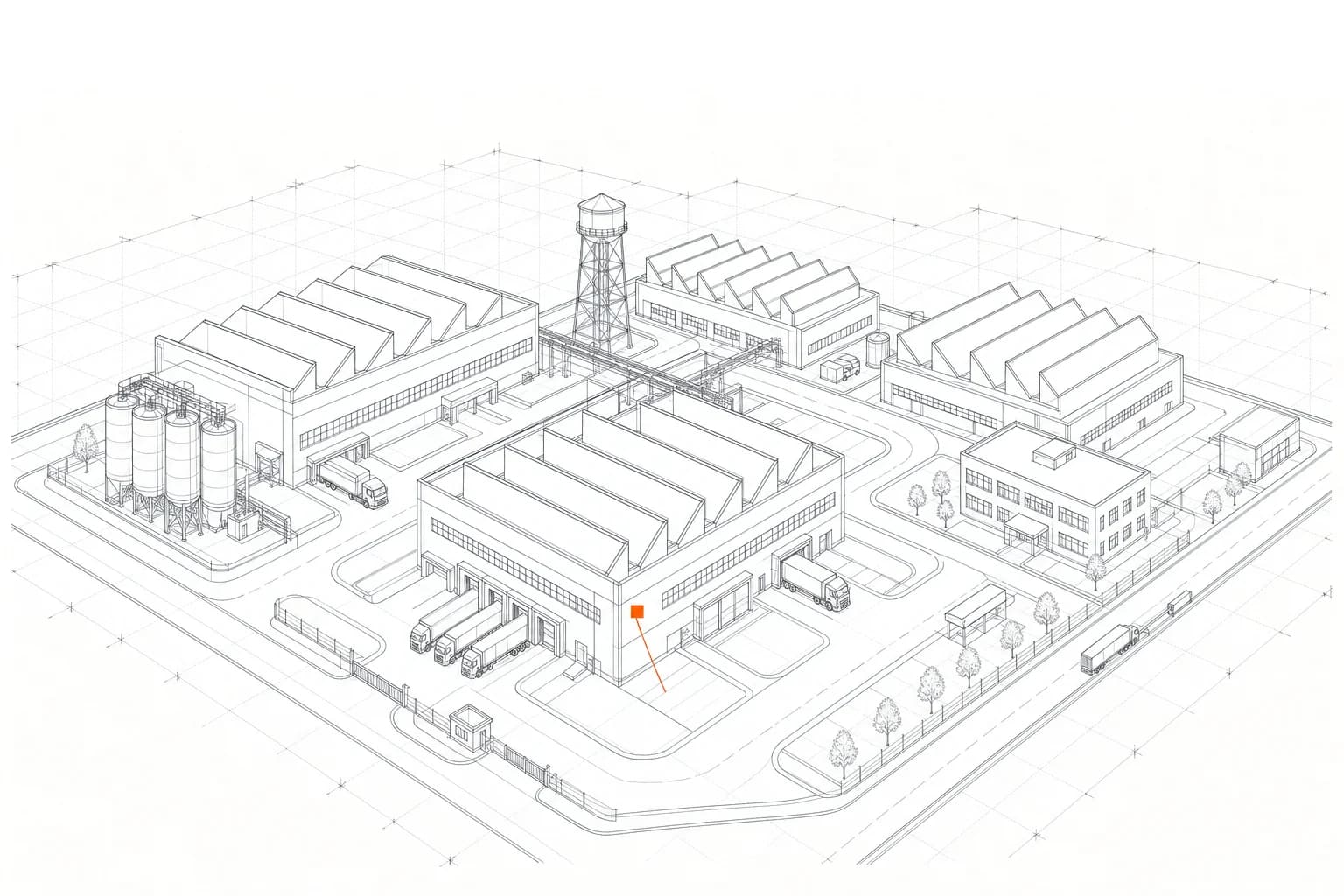
The foundation your applications run on.
The foundation is everything that makes an AI business application easier to build, deploy, run and maintain. A data-level understanding of your business, a business-level understanding of it, and the layers you do not let AI write on its own.
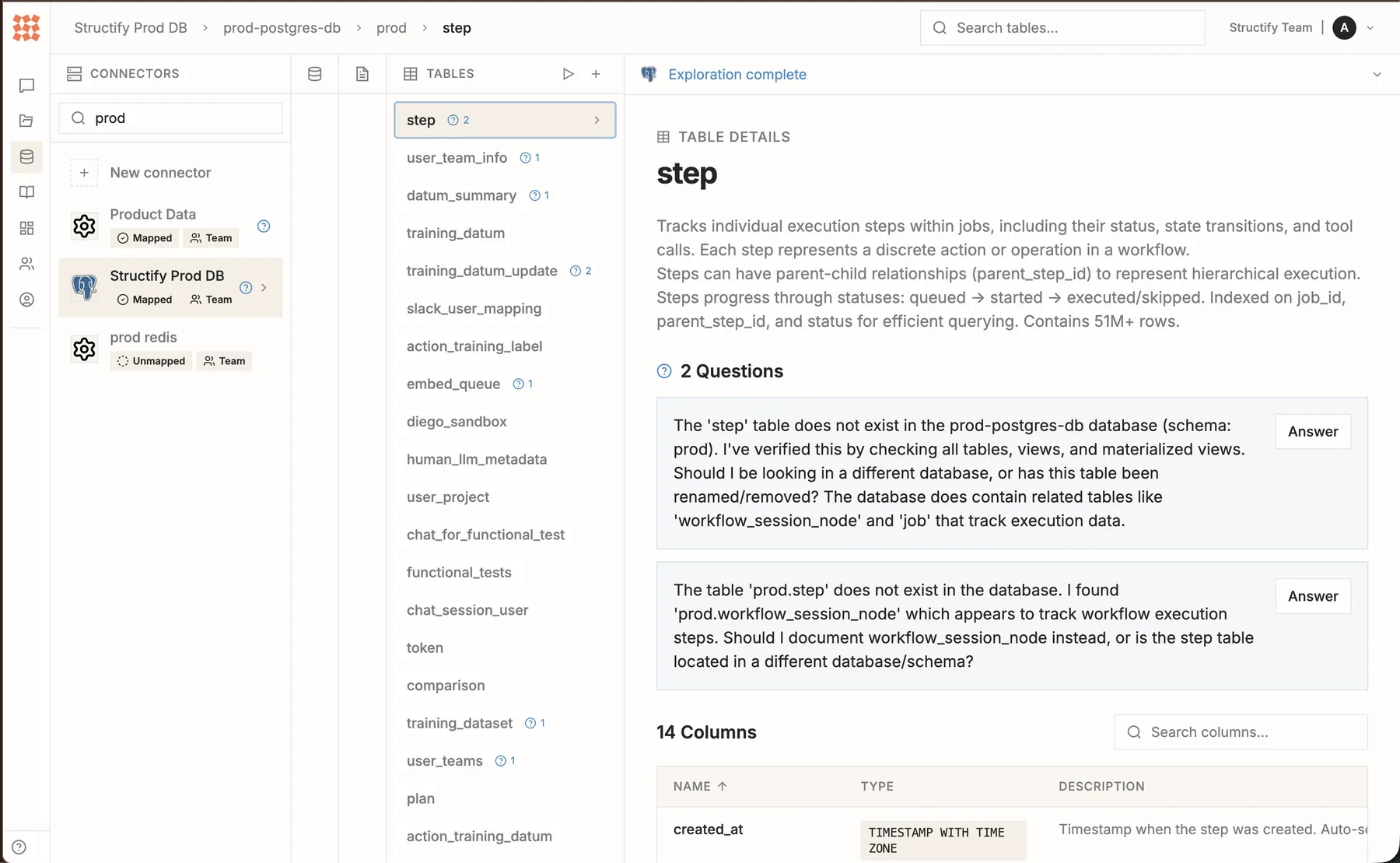
Get your AI blueprintA data-level understanding of your business.
Structify connects to the ERP, PDM, QMS, spreadsheets and shared drives you already run and keeps one governed copy of the data in the auto warehouse, current and queryable.
Where the data cannot answer a question, Structify asks the person who owns it. That is the part a warehouse alone never does.
- One governed copy
- Current and queryable, rather than a copy that was true last quarter.
- Structured and not
- Warehouses and databases alongside documents, email and free text.
- Nothing left behind
- Legacy file servers and systems that predate everyone still in the building.
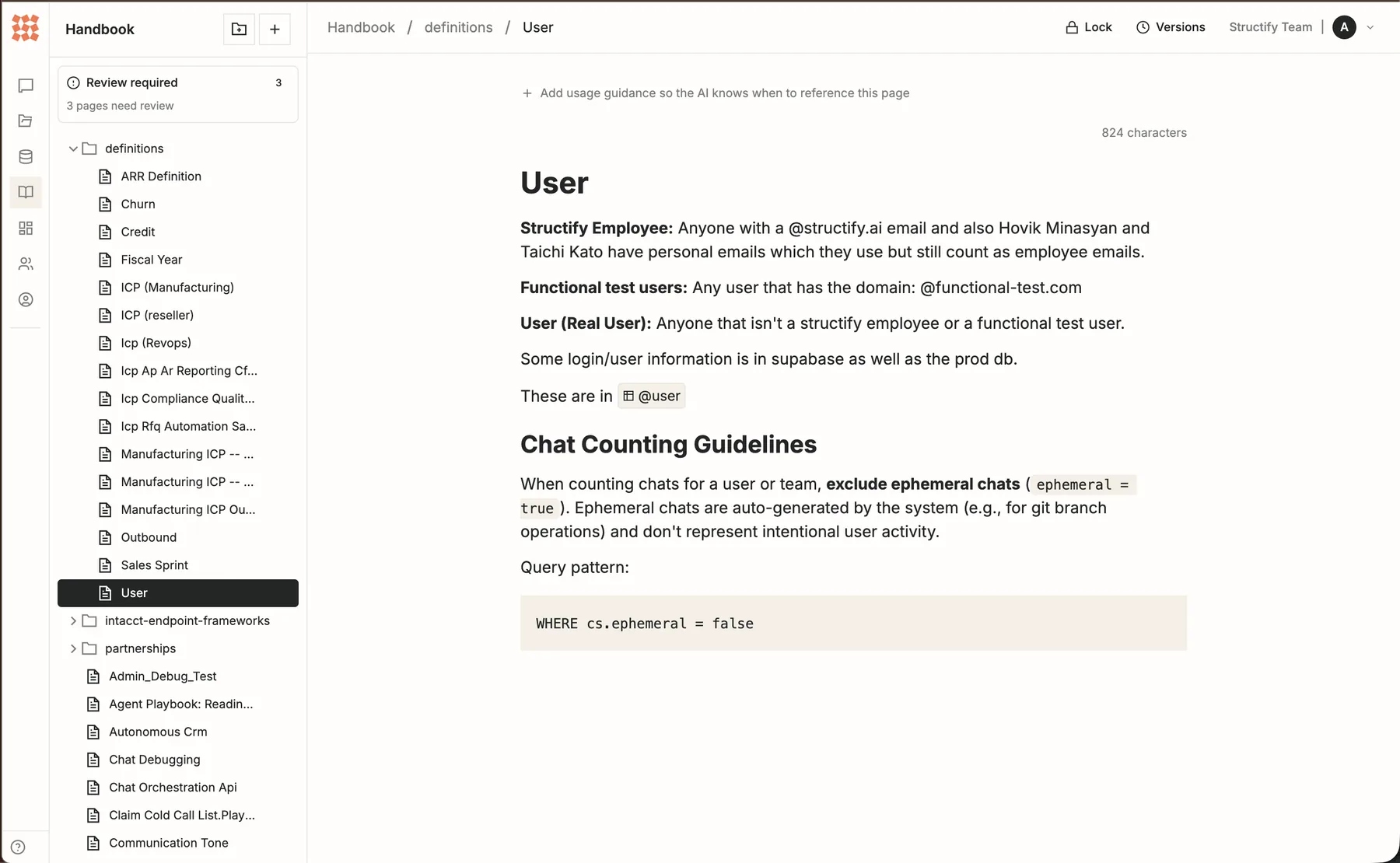
A business-level understanding of it.
How your business defines a part, a job, a revision, a hold. Much of how a business works was conveyed through oral tradition, and AI cannot work from oral tradition.
The Handbook writes it down once, your people review it, and every application uses it. When a definition changes, it changes in one place.
- Written once
- Your definitions, not a vendor's guess at them.
- Reviewed by your people
- The person who owns the process is the person who signs off on the definition.
- Read by every application
- The hundredth application inherits the definitions the first one established.
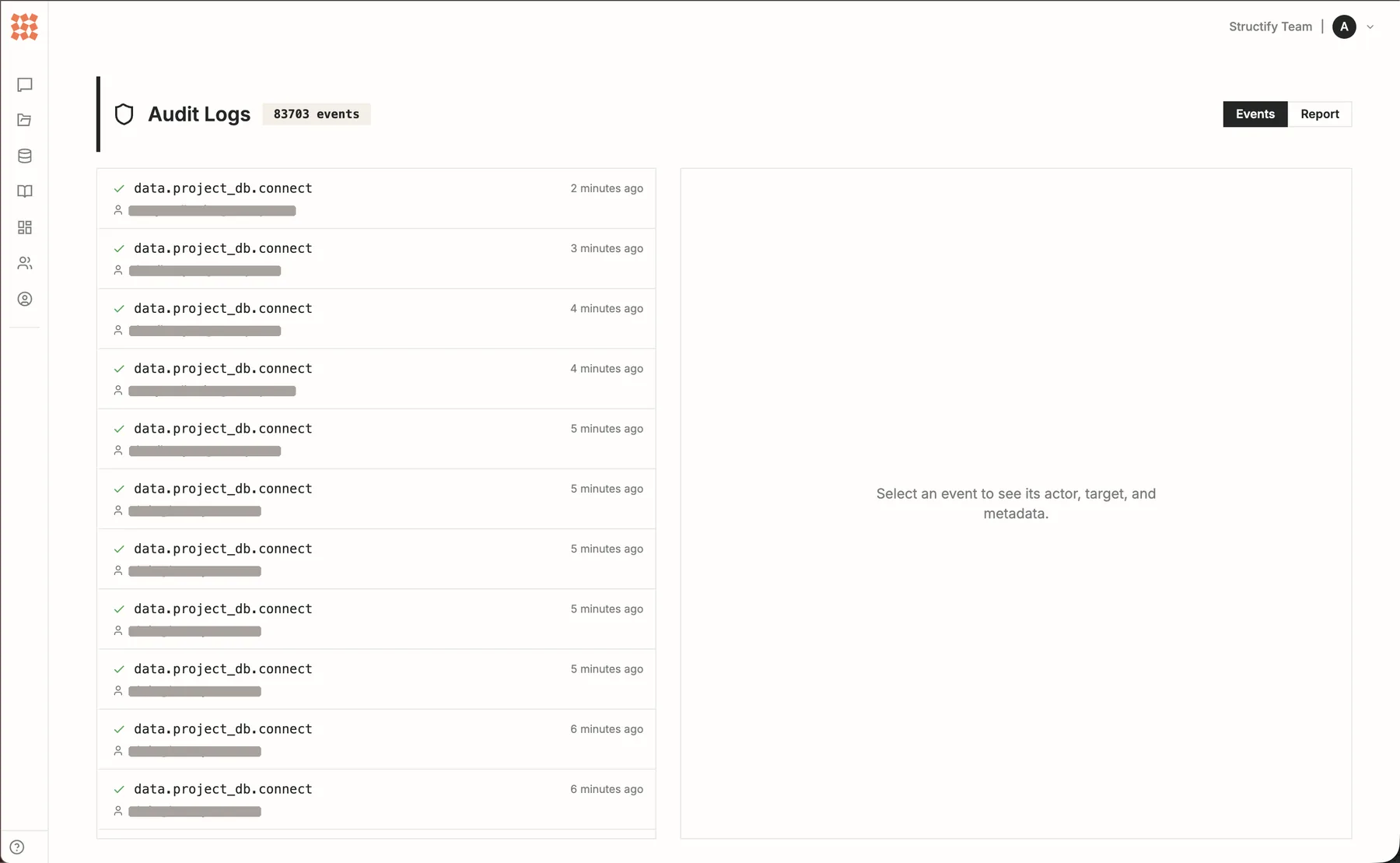
Authentication, permissions, audit logs, deployment.
You can build these yourself, but then the liability is yours when they are wrong. On the foundation they are the same every time, already built and already audited.
Everything ships as client-owned code, every change reviewed and logged.
- Role-based access
- On every application, from the first one.
- Audit logs
- On every action, intact, and available when an auditor asks.
- Deployment
- The same path every time, including GovCloud where the work requires it.
The applications are form-fit. The way we build them is not.
Form-fit applications are the best kind, except in two ways: they are terrible to implement and terrible to maintain. The foundation takes both costs down by being the same every time.
The component library
The parts that come up again and again stop being rewritten. Each project starts from a component rather than a blank page.
The catalog
The applications that come up again and again ship as catalog items, priced and scoped like any other part you buy.
Guided automations
The work that recurs runs on the foundation, on your definitions and your permissions, rather than on a script somebody wrote once.
Built for work where being wrong is not an option.
SOC 2 Type II, HIPAA, CMMC Level 2 and GDPR, on a foundation where authentication is secure, audit logs are intact and the data stays inside the boundary you control.