Manufacturers have spent decades trying to convince everyone that nothing ever goes wrong in a factory. That's part of why young people don't want to work in them.
"It just sounds boring"
I was talking to a middle schooler recently about what she thought working in a factory was like.
She described almost exactly the image manufacturing has spent decades projecting: a Henry Ford-style assembly line running perfectly, everyone doing the same task over and over, parts moving from one station to the next without anything going wrong.
Then she said, "It just sounds boring."
Of course it does. We've done an incredible job convincing everyone that manufacturing is boring.
The story of perfection
Manufacturers understandably want customers to believe their factories run perfectly. Every part is to spec. Every shipment leaves on time. Every machine works. Every process is dialed in. No defects, no surprises, no chaos.
The problem is that when you tell that story long enough, prospective employees start believing it too. And who wants to spend their career watching a perfect process repeat itself?
What a shop floor is actually like
The story is also completely detached from what I've seen inside factories.
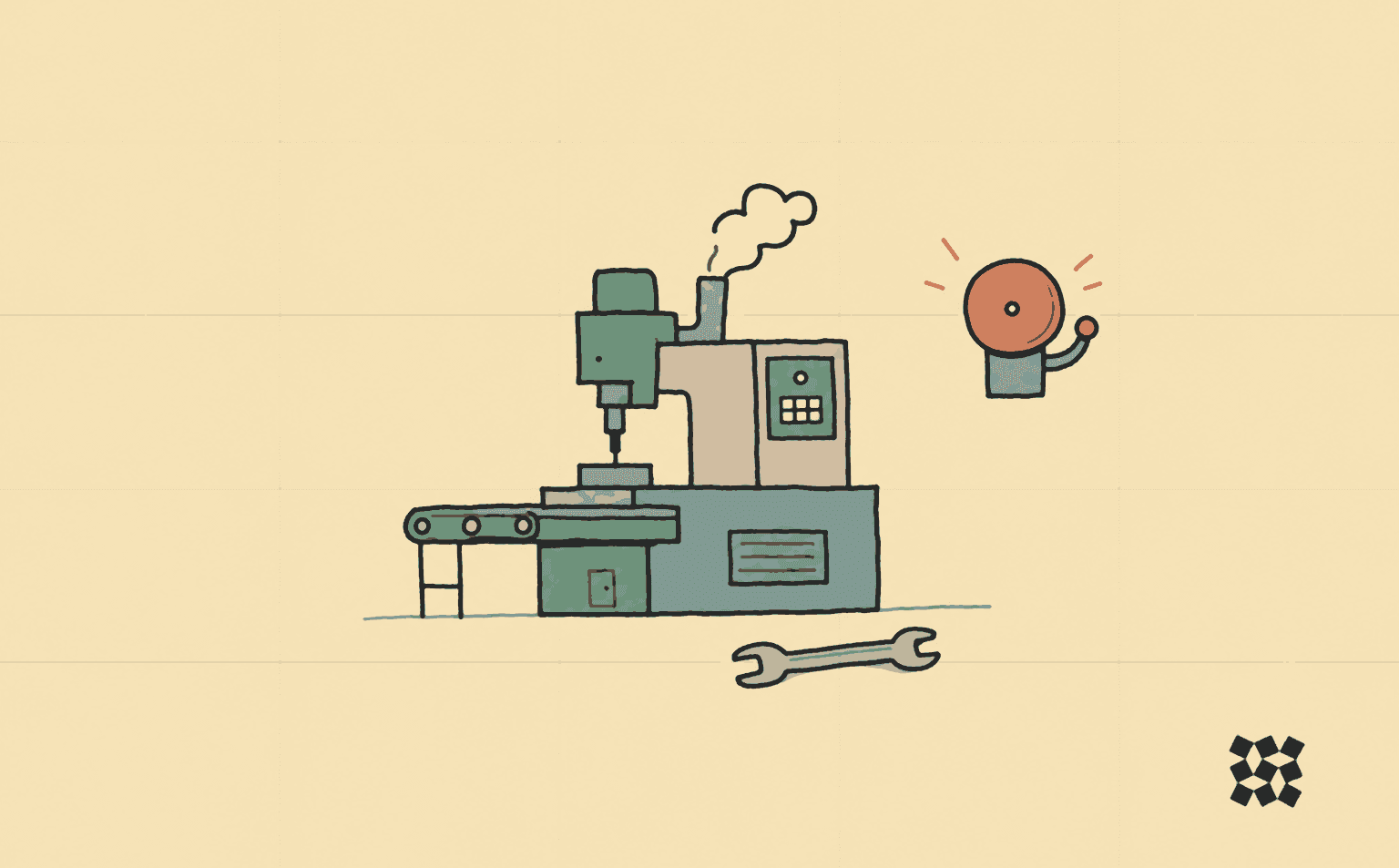
I was on a shop floor recently when a fire alarm suddenly went off. Everyone immediately sprinted toward one side of the facility, because they thought something had happened to a critical part being laser welded. A few moments later, everyone realized the part was fine. The fire alarm itself had malfunctioned.
That is a much better representation of manufacturing.
Something is always happening. A machine goes down. A supplier is late. A tolerance starts drifting. Scrap jumps unexpectedly. A customer changes an order. A critical part suddenly looks wrong. A process that worked perfectly yesterday decides it doesn't want to work today.
And then a group of smart people has to figure out what happened and fix it. That isn't boring. It's an endless supply of real, physical, consequential problems.
Tell the real stories
I think manufacturing leaders should talk about those problems more, not less.
Talk about the line that kept going down and the maintenance tech who finally figured out why. Talk about the quality issue that had three engineers stumped for a week. Talk about the process your team redesigned because the old way wasn't good enough. Talk about the failures, the weird edge cases, the things that broke, and the people who fixed them.
Obviously, the goal is still to eliminate problems. Nobody wants more defects or downtime. But pretending the problems never existed strips away the most interesting part of the work.
Smart, hardworking young people want difficult things to solve. They want responsibility. They want to learn quickly. They want to work somewhere their ingenuity actually matters.
Manufacturing has all of that in abundance. We just need to stop hiding it behind a false story of perfection.