This week we released a new feature in beta that we expect to cut customers' OpenAI and Claude spend roughly in half. Here's the experiment behind it, and why it works.
Same job, one change
We gave Codex, OpenAI's coding agent, the same job twice on top of a mock ERP environment, and changed only one thing.
The job was to build a simple report showing which customer invoices are overdue, pulled from a company's business system. It's the kind of everyday tool every manufacturer needs.
The first time, Codex started from scratch. The second time, it started on top of Structify through our CLI, where the company's data and business rules were already organized.
The scorecard
Both versions got the right answer. But building on Structify, Codex:
- needed about 40% less work to get there
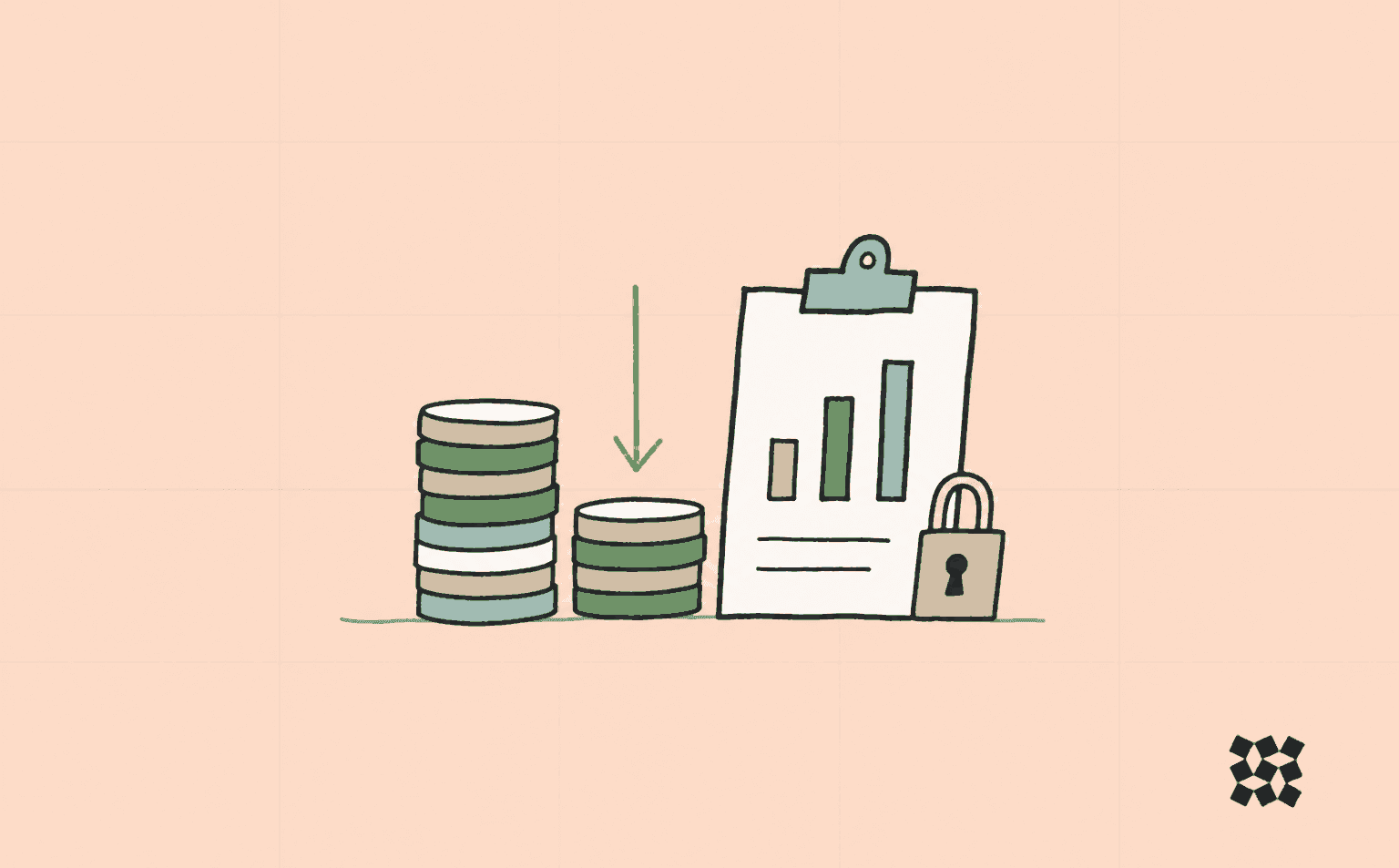
- cost about half as much to build
One report costs pennies either way. But a company never needs just one tool. It needs a quoting tool, a way to flag late suppliers, a quality checklist, and dozens more. If the AI has to relearn how your business works every time, you pay for that every time, and each tool ends up with its own slightly different version of the truth.
What the scorecard didn't measure
There was another difference. The version Codex built on its own had no controls over who could see what, and no record of who changed what. Anyone who opened it could see everything. The Structify version had both built in.
In a real company, that matters. A floor supervisor shouldn't see payroll, and a supplier shouldn't see your margins. If you work with the government, an auditor will ask who had access and when.
The lesson
The lesson isn't that one AI is smarter than another. AI gets cheaper and safer when it builds on what your company already knows, instead of starting over every time.
We saw the same pattern when we measured token savings across Claude Opus and Haiku. If you want to try the beta on your own systems, get in touch.